

Business organisations push for deregulation to address competitiveness, but environmental legislation can contribute to boosting innovation and commercial success, writes Mats Engström.
Mats Engström is a senior policy fellow at the European Council on Foreign Relations (ECFR).
When Asian cities buy buses, compliance with EU emissions standards is often a criterion. Similar cases are well documented in other areas. Regulation for the internal market gives the European Union influence in other parts of the world.
However, a recent push by business organisations risks diminishing Europe’s power. Business Europe is calling for a ”regulatory breathing space” and objects to new green legislation.
Already, the revision of the REACH chemicals regulation has been postponed and more environmental proposals are in the firing line. Similar examples can be found in other policy areas.
At its December meeting, the European Council invited the Commission to develop a strategy to boost competitiveness and productivity, to be presented in early 2023.
The Swedish rotating EU Presidency has made competitiveness a key priority and it is likely to push for far-reaching Council conclusions during the spring. If badly designed, such conclusions might contribute to derailing the Green Deal and negatively affect European green leadership in the world.
That would be narrow-sighted. Several factors contribute to competitiveness, and the situation differs much between industrial sectors, for example when it comes to the sensitivity to energy prices.
There are many cases where environmental legislation has contributed to innovation and commercial success.
Europe’s market share for green technologies in the future depends on first-movers, and many individual companies are calling for ambitious environmental policies.
”Regulation plays a crucial role in the development and uptake of new low-carbon technologies,” noted the European Commission in a recent report.
But when now addressing competitiveness, business organisations are rather emphasising deregulation. Including new cumbersome ”competitiveness checks” and a strengthening of the ‘one in, one out’ principle (to cancel a similar amount of regulation in the same policy area when new legislation is introduced).
Adaptive governance and good regulatory processes are important, but it is hard to find evidence that environmental regulations in general reduce competitiveness across economies, or impede innovation.
Neither is there much scientific basis for the one in, one out principle or for general quantitative targets on the reduction of environmental legislation. As the European Commission has shown, a better approach is to analyse case-by-case what kind of legislation will be most useful to promote innovation.
This should include the cost of inaction, often higher than short-term investment expenditure because of new regulation. Present impact assessment procedures are already extensive.
If something is to be added, it should be a regular screening of policy areas to identify where lack of regulation is negatively affecting innovation, competitiveness and the European Union’s influence.
Competitiveness is about modernisation, not about stepping on the brakes. Basing policies on the lowest common denominators is not a good growth strategy. As the French and German governments recently stated, it is through technological leadership that European companies can thrive.
The EU should use the 30th anniversary of the internal market in that perspective. If Europe slows down, others will set global standards.
Stronger green industrial policy is certainly needed, for example regarding large demonstration projects outside the present scope of the Innovation Fund, well-designed subsidies for commercialisation, green skills development, and on bridging the current East-West gap in green R&D.
Such factors are more important than trying to slow down legislative processes that aim to protect the environment and human health.
Certainly, there might be a need for some time-limited measures to soften the impact of the present crisis, such as the agreement to somewhat delay the phase-out of free allowances in the emission trading system, ETS. But it is crucial not to move in the wrong direction and endanger EU leadership in the green transition.
A regulatory freeze will not increase competitiveness, but rather the contrary when other countries are moving forward. And a standstill would diminish the soft power of the EU in other parts of the world.
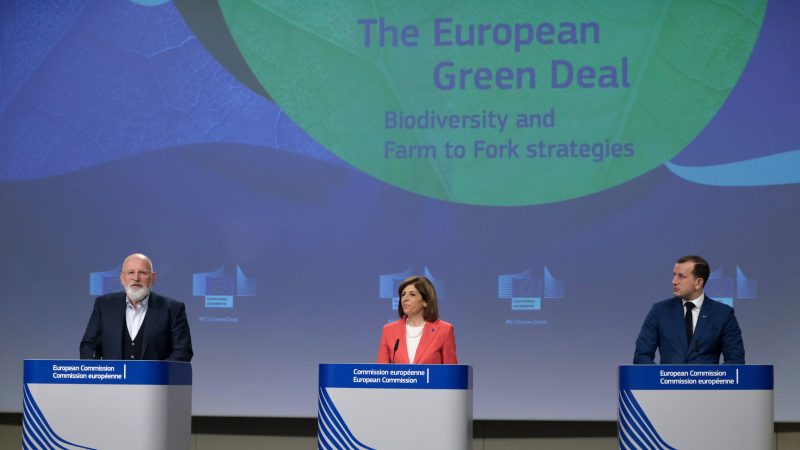
The thinking behind the Green Deal is still valid. Let that be a theme also for the strategy on competitiveness and productivity.
News Source Link
#modernbusinessnetwork #modernbusinessindia #modernglobalnews #modernglobalbusiness
#modernbusinessaward #Enterpreneurship #Startup #Enterpreneurlife #Smallbusinessowner #Sales
#smallbusiness #supportsmallbusiness #handmade #shoplocal #shopsmall #investing #wealth #money
